Investing As a Journey - The Trail and the Portfolio
Eight lessons from hiking a hundred miles on foot — and what they reinforced to me about managing money.
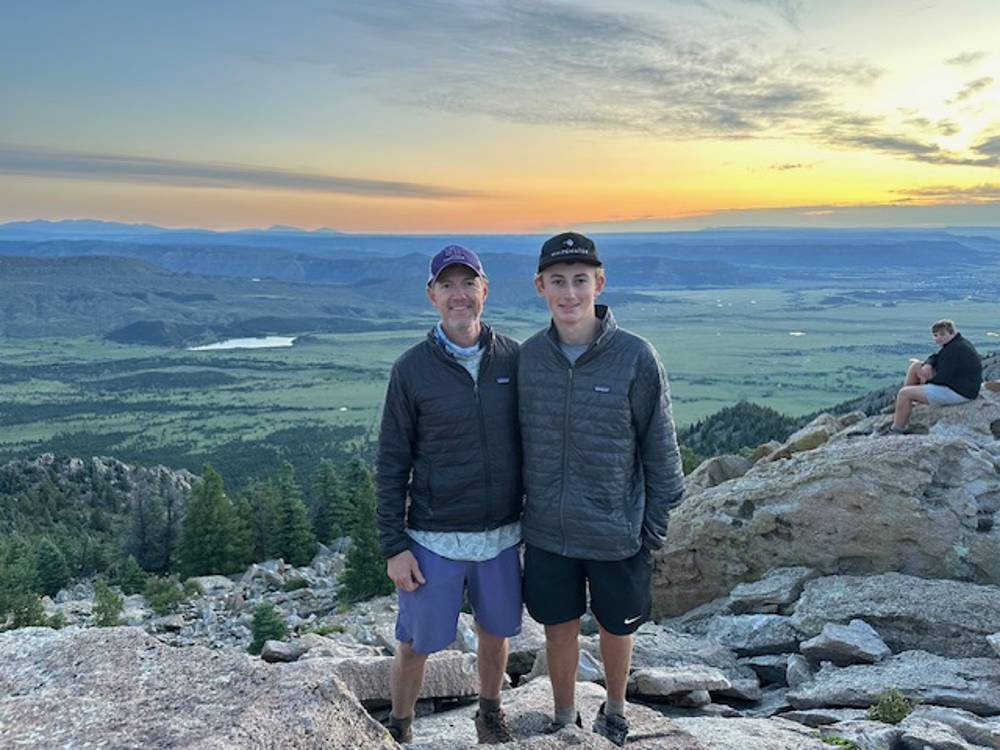
Last summer, almost one year ago exactly, I had the privilege of hiking with my son and his Boy Scout troop on a trek of more than a hundred miles through the Sangre de Cristo mountains at Philmont Scout Ranch in New Mexico. We climbed above 12,000 feet, carried everything we needed on our backs, and spent thirteen days getting from one point to another the slow way. A year later deep in the journey of launching our firm EQV Advisory, I think often of the memorable trek from this past summer. There are a lot of similarities between the wilds of the mountains and the wilds of investing and the lessons from navigating both can teach a lot about the other.
The right tools aren’t a luxury, they are a necessity.
There’s a moment on every trek when you’re grateful you didn’t cut corners on gear. The trekking poles that save your knees on the descent. The stove that actually lights at altitude. The pack that’s light enough to carry but tough enough to survive. The first aid kit you hoped to never open. Bad tools don’t just slow you down; they can end the expedition. Managing money is no different. The outcome depends on the quality of what you’re working with: a well-constructed wealth plan, a trading platform that’s both efficient and cost-effective, real due diligence acumen, the right legal and tax partners, access to financing when opportunity calls. Amateurs obsess over the destination. Professionals obsess over the equipment that gets them there to navigate the challenging terrain.
The pace that feels too slow is usually the right one.
By day three, the chargers are blistered and quiet, and the steady walkers have passed them for good. Philmont taught me to set a pace I could hold for thirteen days, not thirteen miles, thirteen hours, or thirteen minutes. Markets reward the same temperament. The returns that compound are the ones you can stay invested in through every kind of weather. A sprint you can’t sustain isn’t progress. Plan for the long haul and pace yourself accordingly.
You can’t control the environment, but you can control whether you’re ready for it.
Afternoon thunderstorms are apt to roll over the mountains nearly every day, and they don’t check your itinerary first. We didn’t try to predict them to the hour. We got up early, moved with intention, and made sure we were off the exposed ridgelines before the afternoon heat. More importantly, we brought ample rain gear so that we were ready for whatever weather came our way. Investing isn’t about forecasting the next storm. Nobody can, and trust me, it will come. Investing and managing wealth is about building something sturdy enough that the storm, when it comes, is something you move through rather than something that ends the trip.
The only certainty is uncertainty. So, you plan ahead for its arrival.
Here’s the paradox of the backcountry: the one thing you know for sure is that something will go wrong. You just don’t know what. A bloody nose, a lightning cell, a broken tent fly. You can’t plan for the specific surprise, but you can plan for surprise itself. So, you practice your procedures until they’re muscle memory. You run the what-ifs before you need them. You decide who does what in an emergency while everyone’s still calm and dry. By the time circumstances call for the plan, the planning is already done. Investing rewards the same foresight: the contingencies you set in place during calm markets are the ones that save you when the market stops being calm. The worst time to write the emergency plan is during the emergency.
The map is not the trail.
We planned our route carefully, and then the trail did what trails do. A water source was dry. A campsite was farther than it looked. A stretch marked “moderate” turned out to be a cruel inside joke. The plan still mattered enormously. It just had to survive contact with reality. A good financial plan works the same way. Its value isn’t in being perfectly right. It’s in giving you a direction to adjust from when the terrain surprises you.
No single instrument tells you where you are.
On the trail, you never navigate from the map alone. You triangulate. You read the map against the compass, the compass against the terrain, the terrain against the light and the weather, and all of it against the judgment of the people walking beside you who have something at stake in getting it right. Trust one instrument blindly and you walk confidently off a cliff. The same trap waits in investing. One data point, one indicator, one metric that confirms what you already wanted to believe, and you’ve stopped navigating and started guessing. The real work is assembling the mosaic: the data and the context, the numbers and the narrative, your own read and the counsel of people invested in the outcome. Conviction should come from the convergence of many signals, never from the comfort of one.
You go farther because of who’s walking with you.
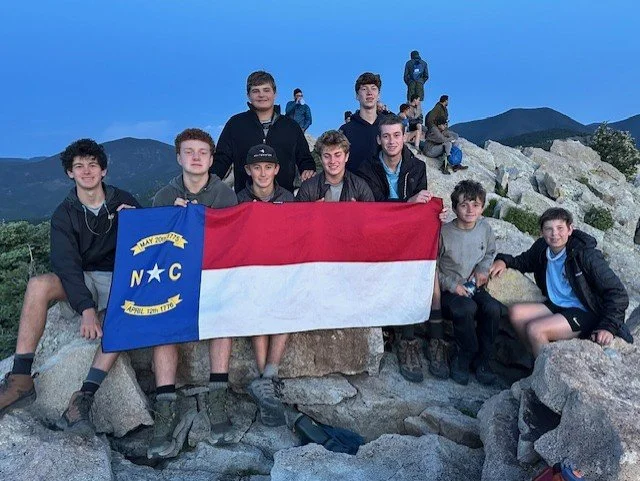
Twelve teenagers, four adults, thirteen days, one goal. The day we had planned to ascend our highest peak, Mount Baldy, a good number of our scouts were cooked, blistered, homesick, and ready to be done. As they struggled up the rock face to the peak, a lot of them were ready to quit and call it a day. But one by one, as each of them encouraged the other, they rallied around their crewmates and dug deep to get to the apex. One by one, each of them persevered until all of them got there, a minor miracle in my book. The advisor’s real job isn’t to predict the trail. It’s to be the steady presence beside you when the climb gets hard and quitting starts to look reasonable, the one who says we’re on the right path and closer than you think, keep walking.
The summit isn’t the point.
We reached the top of Mount Baldy, and the view went on forever. But it’s not what I remember most. What I remember were the hard and fun days that got us there, and the 12 crew members who came down different than they went up, because they’d done something hard and refused to quit. Wealth works the same way. The goals and numbers you’re chasing matter far less than who you become while you build it patiently, and the life it lets you live along the way.
A hundred miles teaches you that the destination was never really the reward.
The walk was.
— Rob Ragsdale, CFP®, AIF®, CIMA®
Chief Executive Officer
EQV Advisory
EQV Advisory is an investment adviser registered with the U.S. Securities and Exchange Commission. Registration does not imply a certain level of skill or training. More information about EQV’s investment advisory services can be found in its Form ADV Part 2 and/or Form CRS, which is available upon request.